Roofing systems · TPO
TPO Roofing Ottawa
TPO is a thermoplastic single-ply membrane with heat-welded seams. Here's what that means for an Ottawa roof, and what to weigh before choosing it.
The short answer
TPO (thermoplastic polyolefin) is a single-ply membrane, typically white or light grey, whose seams are fused with hot air to form a continuous sheet. Welded seams are its main strength. It can be mechanically fastened, fully adhered or ballasted, and it is common on commercial roofs. Product quality varies between manufacturers, and good detailing is essential. We repair existing TPO roofs and discuss it as an option for replacements after assessing the roof.
TPO in a heating-dominated climate
TPO's reflective surface reduces summer heat gain, which helps air-conditioned buildings. In Ottawa, where heating dominates, that benefit is smaller in winter — and snow covers the roof for much of it anyway. Reflectivity shouldn't be the main reason to choose TPO here; seam strength, detailing and the building's use matter more.
Seams, flashing, drainage and insulation
Seams
Hot-air welding fuses overlapping sheets. Done well, the seam is as strong as the sheet. Welds should be probed and checked during installation.
Flashing
Walls, curbs and penetrations use TPO flashing membrane and pre-formed corners and boots, also welded. Poorly welded corners are a common defect.
Drainage
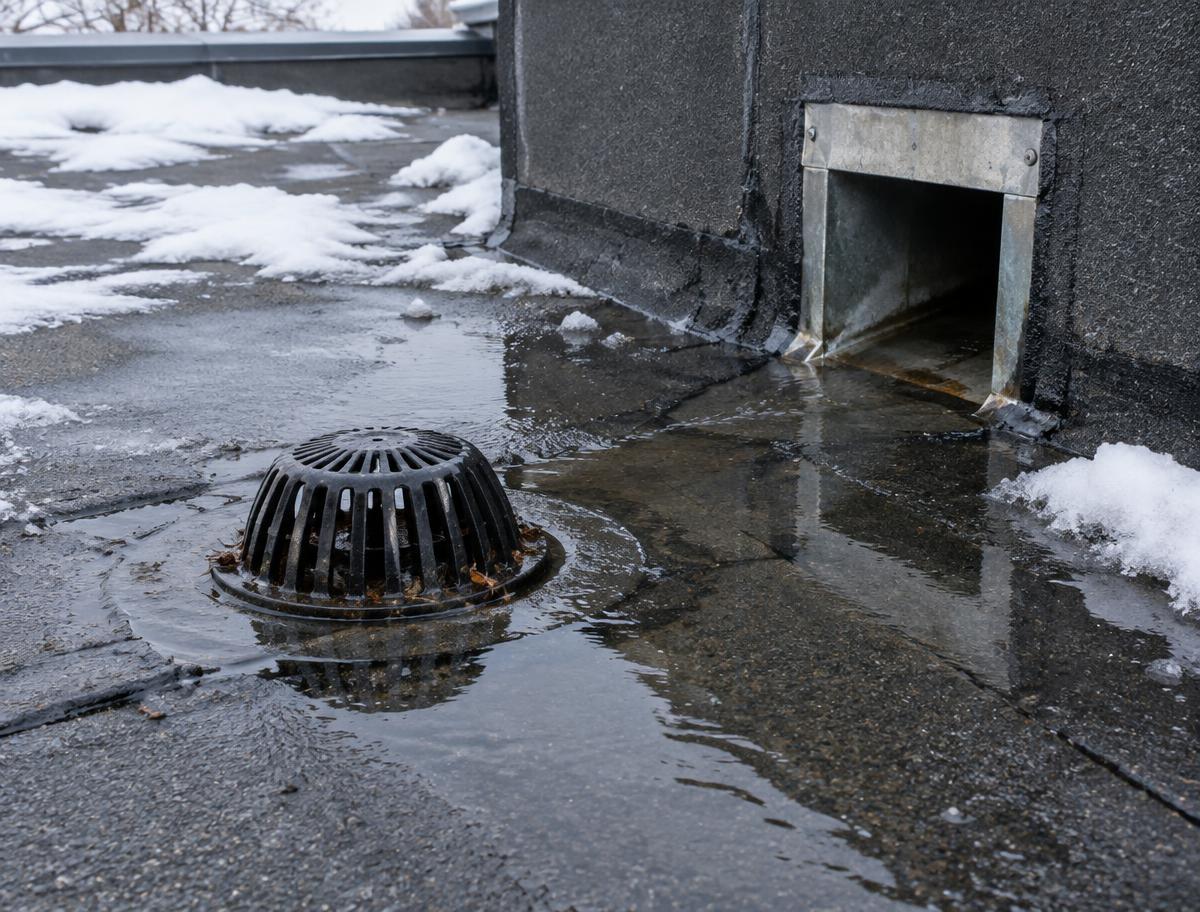
Like any single-ply roof, TPO depends on water reaching drains. Ponding areas should be corrected with tapered insulation or additional drains.
Insulation
Mechanically fastened TPO is often installed over rigid insulation boards; a replacement is the time to bring insulation closer to current expectations.
Repairing TPO: limitations
TPO is repaired by welding a TPO patch to clean, prepared membrane. As TPO ages and weathers, the surface can become harder to weld and may need extra cleaning or preparation. Adhesive patches and generic sealants are short-term at best. Very old or brittle TPO may not accept a reliable weld, which is a signal that replacement should be considered.
Pros and cons
- Pro: heat-welded seams form a continuous membrane
- Pro: reflective surface reduces summer heat gain
- Pro: lightweight, suitable for large commercial roofs
- Con: quality varies between products
- Con: welding requires skilled installers and suitable conditions
- Con: aged TPO can be difficult to weld for repairs
Quote cost factors
Size and shape of the roof; whether existing roofing must be removed; the condition of the deck; insulation type and thickness; the number of drains, penetrations and curbs; parapet and wall flashing height; access and hoisting; and the season. We don't publish flat prices because these vary widely from roof to roof.
Maintenance
Clear drains in spring and fall, check welded corners and curb flashings, and protect regular service routes with walkway pads. Have damage from dropped tools or debris repaired promptly while the membrane is still easy to weld.
References: City of Ottawa — Do I need a building permit? · NRC Energy RCI
Frequently asked questions
Is TPO good in Ottawa winters?
TPO is used in cold climates. Its welded seams are a strength; its reflectivity matters less here than in hot climates. Suitability depends on the building and details.
Can old TPO be repaired?
Often, by welding a patch to cleaned membrane. Very aged or brittle TPO may not weld reliably, which points toward replacement.
TPO or EPDM — which is better?
Neither is universally better. Our comparison page explains the differences; the right choice depends on the roof.
Next step
Talk to us about your roof
Share a few details and we'll follow up using the contact method you provide. There's no obligation, and we only use your information to respond to this request.