Commercial
Commercial Flat Roofing in Ottawa
Low-slope roofing for retail plazas, offices, light industrial and multi-unit residential buildings — planned around occupants, equipment and budgets.
The short answer
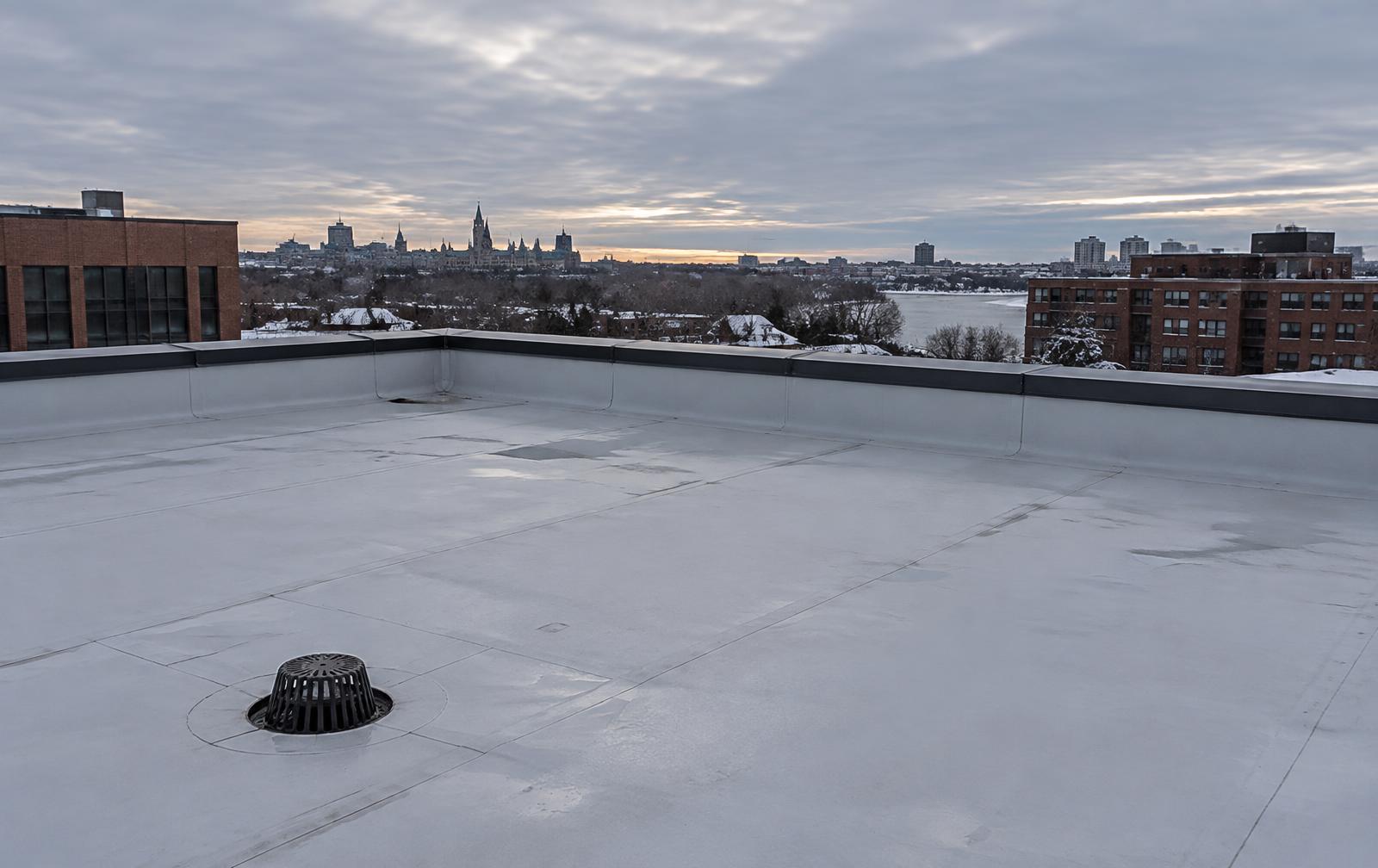
Commercial flat roofing covers the repair, replacement and upkeep of low-slope roofs on business and multi-unit buildings. Compared with houses, these roofs are larger, carry more rooftop equipment and penetrations, and usually have to be worked on while the building stays occupied.
What this service covers
- Condition assessments to support budgeting and capital planning
- Leak response and repairs on single-ply and modified bitumen systems
- Full and phased roof replacements
- Flashing and curb work around HVAC units, vents and equipment
- Drainage improvements: drains, scuppers, crickets and tapered insulation
- Scheduled maintenance programs
Signs it's time for an assessment
- Tenant reports of leaks or ceiling tile staining
- Repeated service calls to the same area of roof
- Ponding water around rooftop units or drains
- Upcoming HVAC replacement that will require new curbs or flashings
- A roof with no recent documented inspection
- Insurance, sale or refinancing reviews asking about roof condition
How the process works
- Step 01
Site review
We review the roof, access, equipment and how the building is occupied and used.
- Step 02
Findings
A written summary of conditions, priorities and options — repair now, plan later, or replace.
- Step 03
Scope and proposal
Clear scope suitable for comparing contractors and for internal approval.
- Step 04
Coordination
Work is planned around tenants, deliveries, mechanical trades and noise or odour concerns.
- Step 05
Execution
Phased installation that keeps the building weather-protected each day.
- Step 06
Ongoing care
Maintenance recommendations so small issues are caught before they reach tenants.
What shapes the scope
Every roof is different, so we don't publish flat prices. These factors drive the scope of work — see what affects flat roof cost for more detail.
- Roof area and complexity
- Size, levels, penetrations and equipment count.
- Occupancy
- Work hours, tenant notices and protection requirements.
- Equipment
- Coordination with mechanical contractors for curbs and unit lifts.
- Access and hoisting
- Building height, crane or hoist needs and laydown space.
- Drainage
- Internal drains, scuppers and any tapered insulation redesign.
- Phasing
- Staging work over time to suit budgets or operations.
Ottawa conditions to consider
Large flat roofs collect large snow loads. Drains that freeze or are blocked by debris let meltwater build up, adding weight and pushing water into vulnerable laps and flashings. Keeping drains clear and checked through the season matters more than on a small roof.
Rooftop equipment is a frequent leak source: vibration, service traffic and curb flashings that age faster than the field membrane. Walkway pads and regular flashing checks reduce damage from maintenance visits.
For snow loading concerns, rely on qualified professionals. Roof snow removal is hazardous work and can damage the membrane if done carelessly; it should not be attempted by untrained staff.
Useful references: the City of Ottawa's “Do I need a building permit?” page and the NRC Energy RCI resource on roof insulation.
Frequently asked questions
Can you work while our building is open?
Most commercial roofing is done with the building occupied. Scheduling, noise, odours, access routes and protection are planned in advance and agreed with you.
Can a replacement be phased over more than one year?
Often yes. Phasing by roof section can spread costs across budgets, provided each section is properly tied in and protected.
Do you provide documentation for property managers?
We provide written findings and scopes so managers, boards and owners can make decisions and compare proposals.
What membranes are common on commercial roofs?
TPO, EPDM and SBS modified bitumen are all widely used. The best fit depends on the building, details, traffic and budget — see our roofing systems page.
Keep reading
Next step
Talk to us about your roof
Share a few details and we'll follow up using the contact method you provide. There's no obligation, and we only use your information to respond to this request.